
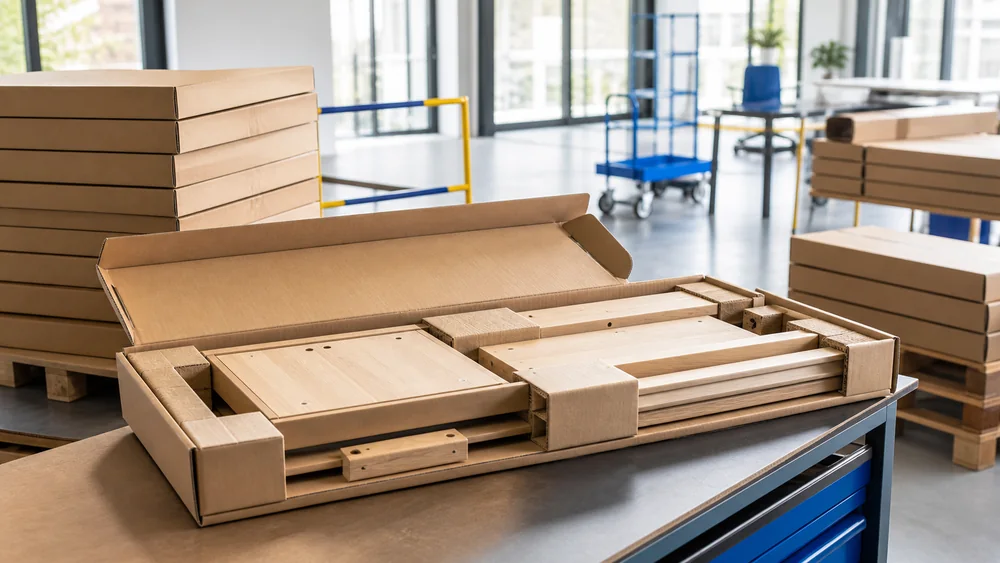
On 12 August 2026, the EU Packaging and Packaging Waste Regulation (PPWR) began to apply generally across the European Union. For furniture brands, importers and e-commerce sellers, packaging is no longer only a product-protection decision. It is also becoming a question of material efficiency, unnecessary space, recyclability and supply-chain cost.
That does not mean every PPWR requirement took effect on the same day. Several obligations have later application dates, and the often-repeated claim that e-commerce packaging is already subject to a 40% empty-space limit is inaccurate. The regulation establishes a future maximum empty-space ratio of 50% for certain grouped, transport and e-commerce packaging, with timing linked to 1 January 2030 or the relevant implementing acts, whichever is later.
For flat-pack furniture, however, the commercial direction is already clear: a carton should not be larger than it needs to be, but reducing its size must not compromise the protection required for transport, storage and delivery.
Why Furniture Packaging Efficiency Matters Now
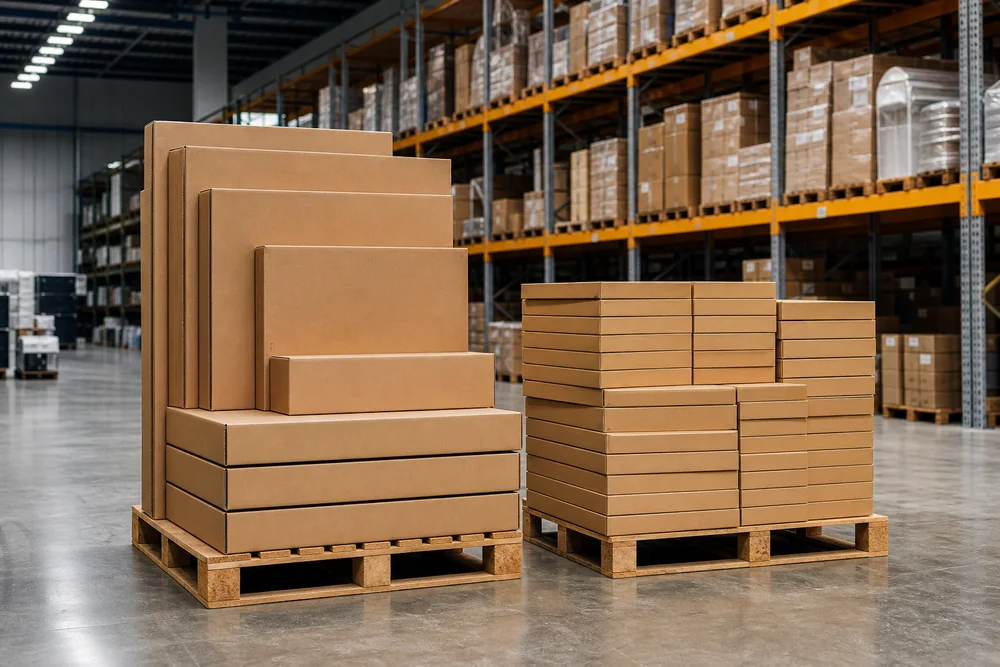
Flat-pack furniture is designed to use space efficiently, yet packaging can gradually become oversized. Extra clearance may be added during development, protective materials may be inserted without rechecking the complete layout, or a carton may be carried over from an earlier product version. Each small increase in width or height is multiplied across every pallet, container, warehouse location and last-mile shipment.
For a European e-commerce brand, the cost is rarely limited to a little more cardboard. A larger packed volume can mean fewer units per container, higher freight cost per unit, more storage space, less efficient fulfilment and—in some parcel networks—higher dimensional-weight charges.
A Real Packaging-Optimization Case: About 200 More Units per Container
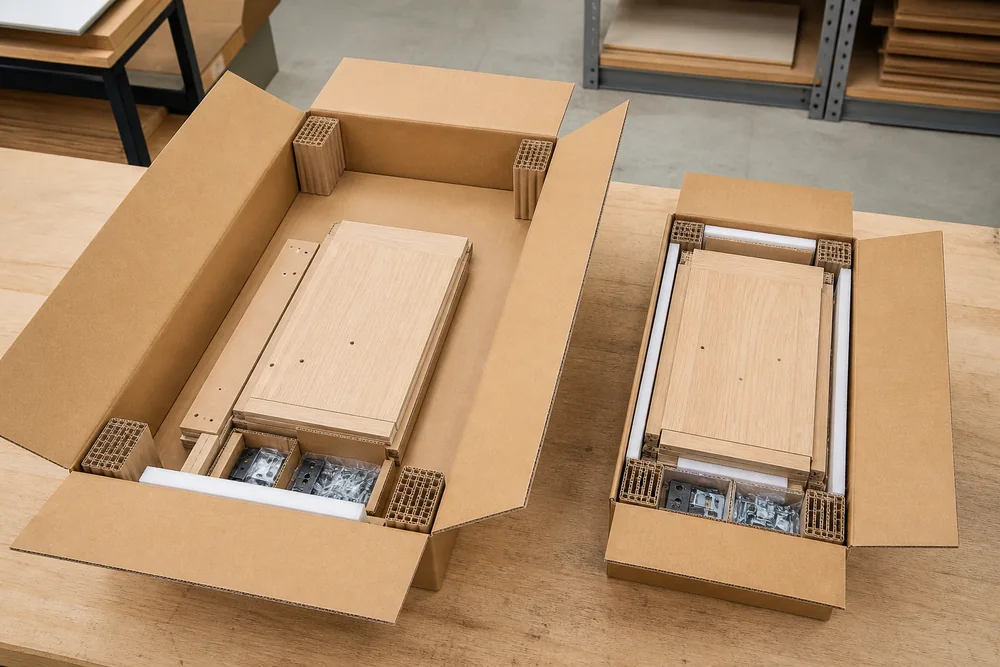
In one customer project, our team reviewed a flat-pack furniture carton that contained avoidable space. We did not simply remove protective material or accept a higher damage risk. We examined the internal arrangement, the dimensions of the paperboard protection and the way the furniture panels and hardware were positioned inside the carton.
After adjusting the packaging structure, we reduced the carton width and height. The smaller pack improved container utilization enough to load approximately 200 additional furniture units in one container, based on the product and loading plan used for that project.
The result reduced the estimated ocean-freight cost per unit and could also lower packaging, warehousing and downstream handling costs. The exact saving depends on the SKU, route, container type and local fulfilment model, but the principle is widely applicable: shipping unused air is expensive.
Smaller Packaging Must Still Pass Physical Tests
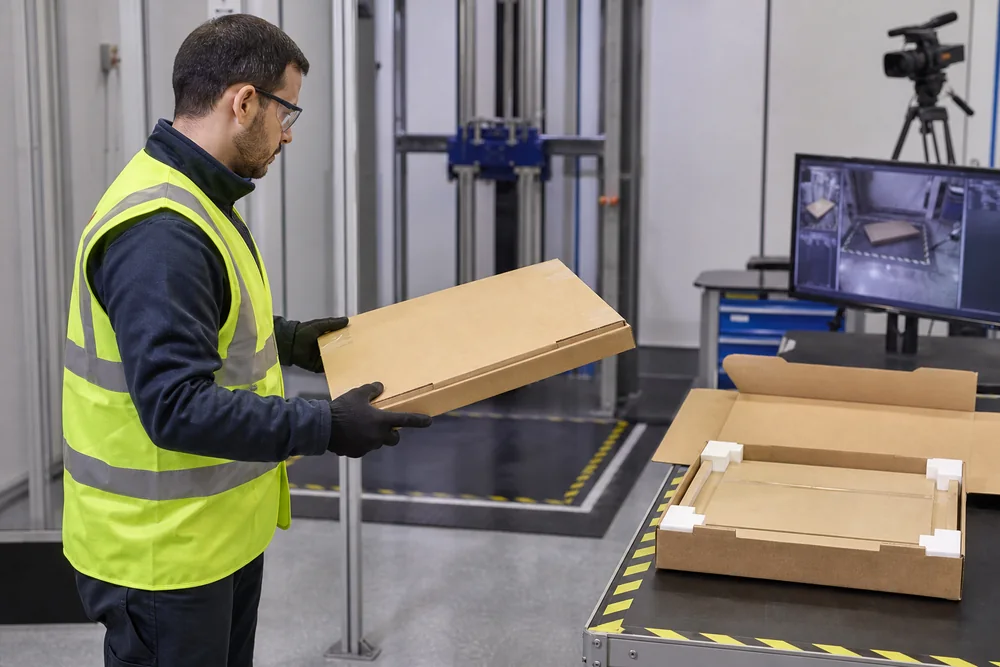
Packaging optimization is an engineering exercise, not a carton-cutting exercise. Flat-pack furniture contains heavy panels, vulnerable corners, surface finishes and small hardware components. If protection is reduced in the wrong place, the cost saved on freight can quickly be lost through damage, returns, replacements and negative reviews.
Our revised package therefore had to be validated against the product’s handling risks. Depending on the sales channel and delivery route, that review may include sample packing, carton measurement, drop testing, vibration or compression testing, panel inspection and a full assembly check after testing. The applicable test plan should be agreed for the actual product and distribution system.
Sustainable packaging is not only about using less material. It is also about removing unnecessary space while keeping the product properly protected.
What the PPWR Actually Says About Packaging Space
The PPWR entered into force on 11 February 2025 and generally applies from 12 August 2026. Its packaging-minimisation rules require manufacturers and importers to consider the minimum weight and volume needed for packaging functionality, taking account of criteria that include product protection, logistics, information requirements, recyclability and recycled content.
The timeline matters. By 12 February 2028, economic operators filling sales packaging must reduce empty space to the minimum necessary for packaging functionality, including product protection. For grouped, transport and e-commerce packaging, Article 24 sets a maximum empty-space ratio of 50% by 1 January 2030 or three years after the relevant implementing acts enter into force, whichever is later. The Commission is due to establish the calculation methodology through implementing acts.
Classification can depend on how a particular carton is used. For example, sales packaging used as e-commerce packaging is treated differently from an additional shipping box. Furniture brands should therefore map each layer of packaging in their actual sales and logistics flow rather than applying a headline percentage to every carton.
Official references: European Commission overview of packaging waste and the PPWR, Regulation (EU) 2025/40 and the European Commission PPWR guidance. This article provides general commercial information, not legal advice.
Five Packaging Questions European Furniture Brands Should Ask
- Where is the unused space? Review the carton externally and the complete internal layout, including gaps filled by foam, paper or other materials.
- Which protection is essential? Identify vulnerable corners, edges, surfaces, hardware and load-bearing points before changing the structure.
- Has the smaller carton been tested? Validate the final packed sample, not only a digital drawing or theoretical loading plan.
- What is the logistics gain? Recalculate pallet quantity, container loading, warehouse footprint and dimensional weight using the new packed dimensions.
- Which PPWR role applies? Confirm who is the manufacturer, importer or packaging-filling operator and how each packaging layer is classified for the target market.
From a Smaller Carton to a Better Landed Cost
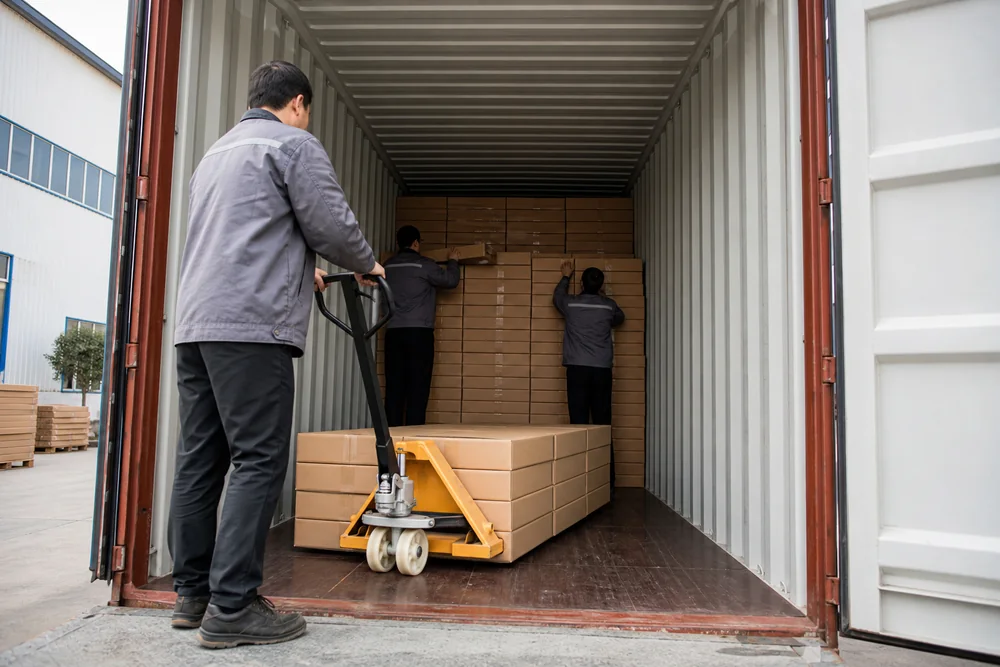
Container utilization is where a packaging change becomes a purchasing result. Buyers should compare the old and new carton dimensions in a loading plan, then verify the plan during actual loading. An improvement that looks small at carton level may become commercially meaningful when repeated across hundreds or thousands of units.
Loading quantity should not be viewed in isolation. The revised package should remain practical for production, palletization, warehouse handling, parcel labels and customer unpacking. It should also avoid shifting cost from cardboard to unnecessary filler. The strongest solution improves total landed cost without creating a new quality or handling problem.
Prepare Your Furniture Packaging Before the Next Order

European furniture brands do not need to wait for every later PPWR milestone before improving packaging efficiency. Reviewing carton dimensions now can reveal direct cost savings while helping the business move toward the regulation’s broader direction of packaging minimisation and improved recyclability.
At HOMVND, we can review a flat-pack furniture product’s panel layout, protective structure, carton dimensions, packed weight, test requirements and container-loading plan. The objective is not simply to use a smaller box. It is to find the smallest practical package that still protects the product through its real delivery journey.
Send us your product drawing or sample, current carton dimensions, destination market, sales channel and loading target. We can evaluate whether packaging optimization may improve container quantity and support your preparation for the EU PPWR.